A Long Life Short Biography
I was born in February 1947 in the Park district of Sheffield, a very rundown area of back-to-back housing in the centre of the city that was unfit for human habitation long before Hitler had it bombed during WW2. Our house (33a) Granville Street stood or I should say was held up by large wooden supports to stop it from falling down the hillside onto The Station Pub and the Midland Station’s main line to London further down the hillside.
The row of houses faced out towards the City Centre and stood on a landing with steps leading down into a large yard where a block of toilets occupied the centre. At the bottom of the yard stood a wall between us and the Station pub’s backyard. As I said the houses were back-to-back with the other half facing the cobbles of Granville Lane above. Everything about the road reeked 19th Century poverty, as I said cobbles with thick bitumen/ tar that melted in hot weather sticking to shoes, trouser’ backsides and little fingers that poked at it with lollipop sticks. The houses looked older than they were with front curb stones concaved from the passage of feet and women also looking much older than their years kneeling over the curbs rhythmically scrubbing until a layer of gritstone had been removed. I was later told by my dad that this was the scene of my meeting with Gunner Wheyhall an infamous member of the Mooney Gang and so called because he carried a gun. According to my dad, I was happily digging tar out from between the cobbles when Gunner came along and gave me a sixpence probably as compensation for the smacking he knew I was going to get later from my mum for getting the sticky stuff over my hands and clothes. I don’t suppose butter was cheap in the early 1950s but it seems it was good for breaking down the tar on stained hands and I still remember the experience 70 years later. My dad told me that Gunner, who dressed like a toff, caught the train to Manchester most days where he would spend his time picking pockets. I can only assume he’d had a very good day, hence the sixpence.
My mum, one of thirteen, became quite ill after giving birth to my sister when I was four and I had to spend some time living at my aunts on Granville Lane and sleeping with my cousin Joan whom I later found out objected to me being christened Stanley (too old fashioned) and when asked what she would call me said Peter. God bless my cousin Joan! I set off for my first day at Park School from my aunts and that’s about as much as I can remember about the place. At some point during this early period, we left the area and moved to the Manor Estate and I transferred to Pipworth Road Infants School.
The Manor Estate was a typical working-class estate, solidly built in the late 1920s with large gardens, inside toilets and wide roads ideal for playing football in between the odd car and bus. I went to Pipworth Rd Secondary Modern School and left at 15 without anything on paper to say I had spent 10 years there. My main memories are of a violent environment, mainly perpetrated by the teaching staff who delighted in hurting the pupils to offset the misery of their lives. Many years later while doing my PGCE at City College my impression of the school was confirmed by one of the staff who did his probationary year at Pipworth, starting at Easter 1962 and missing me by a few weeks. He told me it was so depressing that he seriously considered leaving the profession because of the violence stirred up by the staff.
Working Life
Easter 1962 found me working at TC Harrison the main Ford dealership in Sheffield, after a disagreement over my summer holidays I left and by September I was working for the NCB and doing my underground training. eighteen months later I moved on to James Neils, Eclipse Tools and was working a milling machine in the Magnet Section. After four years of relative stability, I left and had a series of jobs: Heeley Mining, Mathia Spencers and Sons, Charles Neils, one day as a vacuum salesman, back to James Neils for a short period, Osborn Mushet Tools and then Langsett Industries.
My real working life stretched from 1962 to 1975 and ended when I started a full-time, two-year, A-level course at Rotherham College of Art to enable me to go to university and become a teacher. In 1977 I started a degree course at Sheffield University in Political Theory and Institutions and three years later went to City College to complete a Post Graduate Certificate in Education before embarking on a career in teaching at Shirecliffe College of Further Education in 1981. I then spent the following years up to 2007 teaching mainly in FE but also some secondary and even a few months covering in a primary school.
Social Life
From leaving school up to the 1970s my life centred around football. I played most weekends either in the Works League on Saturdays for Jimmy Neils or in the Sunday league for the Three Feathers pub. Monday to Thursday evenings were spent at home, the meager wages never lasted past Sunday night. Friday nights consisted of some kind of pub crawl either in town down the Moor and up London Rd or in Derbyshire to utilize the extra 30 minutes of drinking time at weekends. Saturday nights consisted of going to the Brincliffe Oaks and later Nether Edge Hall to watch Match of the Day on the TV. By 1967 I was fed up with a life devoid of prospects and interest, a life of football and booze.
In the same year whilst working at Osborn Mushet Tools, I met Brian Shirley, a fellow worker at Osborns, and he changed my life for good but not in the way he intended. Brian was back in Sheffield, from Australia, to wind up his father’s TV repair business and he convinced me my future was in Oz. We applied for assisted passage and passed and we were sailing in November the same year. In the summer Brian, a highly respected climber went off to The Alps with his climbing friend Mick Swift and I was invited by Mick’s younger brothers Chris and Pete to go with them to the Sidmouth Folk Festival which I had never heard of. At Sidmouth, I fell in love with English folk music and found a new meaning to my boring life and never made it to Australia until some forty years later.
Me and my guitar
Since that trip to Sidmouth, the English folk scene has been an integral part of my Life. I met my wife Anne at the Sunday Tradition Club, in The Grapes, a year later and joined Sheffield City Morris in 1975 and am still involved but from a music point of view now. From 1968 I started singing at the club and frequented The Barley Mow FC at The Three Cranes and The Highcliffe FC at the same pub and other local clubs in the area. In 1971 Anne and I went to live in Jersey in the Channel Islands and frequented the folk clubs there. When we returned in 1973 to get married I set out to become a teacher. In 1974 I ran the Barley Mow for four years at The Grapes until going to university. I started playing the guitar while in Jersey and fifty years later I’m not much better I am sad to say.
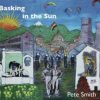
I started writing songs in the 90s after visiting Ecuador with City Morris and most of my songs have political themes. But although I started singing in the late 60s I had no real desire to record my material until I was persuaded by a group of friends and local musicians. So it has taken me fifty years to make a CD of my songs/ material. If you fancy having a listen just click on the image or follow the menu above to my CD page or just use the button below.